
Oral HSV & everyday dating decisions
Cold Sores and Dating: How to Talk Before Kissing
What to say before a kiss, how to change plans when a cold sore appears, and how to leave room for both people's choices.
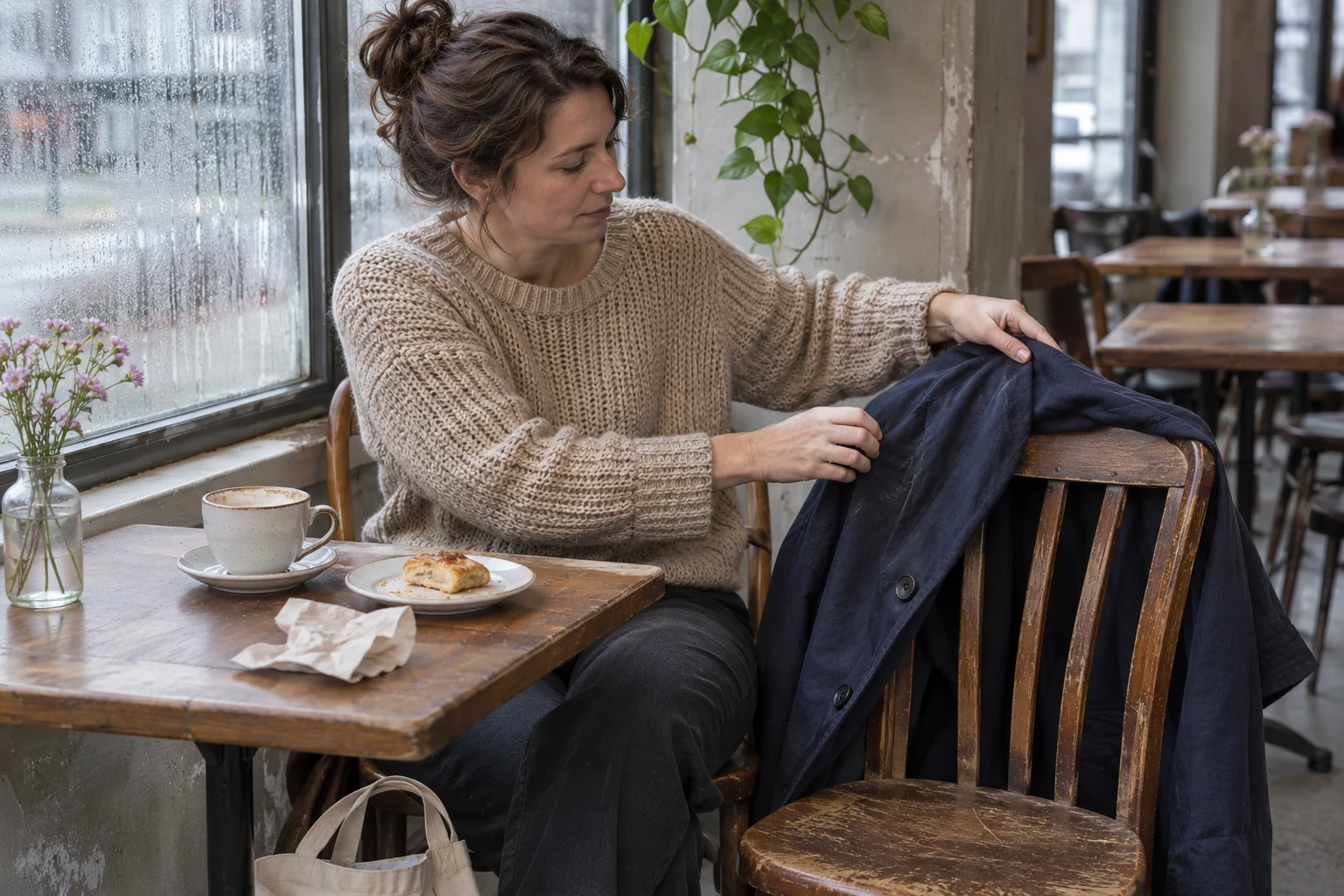
The date has gone well. You are lingering outside the café, neither of you quite ready to say goodbye, when you realise a kiss might be next. You get cold sores. Do you bring it up now? And if your lip has started tingling, does that mean cancelling the evening?
With cold sores and dating, it helps to separate two conversations: telling someone about a history of cold sores, and explaining why you are avoiding kissing today. Both can be straightforward. Neither needs to turn your whole introduction into a medical history.
If you have the familiar warning signs of a cold sore or a sore that is still healing, leave kissing and oral sex out of the plan until it has completely healed. If you have no symptoms, a conversation still matters because HSV-1 can sometimes spread without visible sores. Start with what you know, give the other person room to respond and decide what you are both comfortable with.
A history of cold sores and a cold sore today are different conversations
Cold sores are a form of oral herpes, usually caused by herpes simplex virus type 1, or HSV-1. That does not tell anyone how a person acquired it or what their dating history looks like. The World Health Organization's HSV guidance explains that many HSV-1 infections are acquired during childhood.
The distinction that affects your date is what is happening now. WHO notes that HSV-1 can spread from oral surfaces or skin that look normal, while active sores carry the greatest transmission risk. A clear-looking lip is not a guarantee. A current cold sore needs more than a reassuring explanation.
The NHS cold sore guidance describes the contagious period as beginning with tingling or other warning signs and continuing until the sore has completely healed. It advises avoiding kissing while a cold sore is present and oral sex until it has healed. You do not need to wait for a visible blister before changing the plan.
There is no need to lead with a statistic about how common HSV is. Common does not mean that a particular partner already has it, and it does not decide how they should feel about contact with you.
Bring it up before the moment has to decide for you
A useful time is before a kiss is happening, when neither person has to make an immediate choice while leaning toward the other. That might be during a quiet part of the date, a walk afterward or a message beforehand if writing gives you more space.
You do not have to tell every person who sees your profile. You do need to give someone relevant information before the contact you are discussing. For this guide, bringing up a known cold sore history before kissing is a practical recommendation for informed communication, not a claim about a universal legal rule.
If a kiss catches you by surprise, you can pause it. A brief “I'd like to, but there's something I want to mention first” is enough to create a little space. You do not have to apologise for interrupting the moment.
When you have no symptoms today
Keep the first explanation small enough to take in. Say what you know, explain the relevant uncertainty and invite a response. The following wording is illustrative; it is not a real member conversation or a script tested to produce acceptance.
“Before we kiss, I want to mention that I get cold sores. They're oral herpes. I don't have any symptoms today, but it can sometimes pass without a visible sore. What would you like to know before we decide?”
If HSV-1 has been confirmed as your type, you can name it. If it has not, do not turn an assumption into a laboratory result. “I get cold sores” is a clear place to begin.
In Cleveland Clinic's discussion of cold sores and dating, dermatologist John Anthony, MD, explains: “You can shed the virus even when you don’t have any lesions.” That is why the explanation should not end with “I don't have one right now, so you're safe.”
When you notice tingling or a sore
Be clear about the boundary first, then explain what you would still enjoy. This prevents pulling away from being mistaken for a loss of interest.
“I'd still like to see you, but I think a cold sore is starting. I'm not going to kiss or have oral sex while it's healing. Would you be up for dinner and a walk, or would another day suit you better?”
You can also keep it shorter: “I'm enjoying this. My lip has started tingling, so I'm going to skip kissing tonight.” If you are unsure what a new spot or sensation means, say that you are unsure and get appropriate advice rather than diagnosing it from a photo.
Someone may respond kindly, ask a question, want time or decide against contact. You can answer without arguing them into a yes. Equally, their willingness to kiss does not oblige you to set aside a boundary you have already chosen.
Make a plan for the date you are actually having
A change in kissing plans does not automatically require a change in how much you like each other. You can enjoy a public meal, visit a gallery or walk together without making the evening a test of acceptance. If the sore hurts, you feel unwell or the conversation is too much for today, postponing is reasonable too.
Use the situation in front of you rather than looking for one rule that covers every date.
| Your situation | What to explain | What to do next |
|---|---|---|
| You get cold sores but have no symptoms today | Describe the history and acknowledge that spread without a visible sore is possible. | Allow questions and decide about contact together. Do not promise zero risk. |
| You have warning signs, a sore or an area still healing | Say that you are pausing kissing and oral sex, rather than leaving the other person to guess. | Wait until it has completely healed. Keep a non-kissing date if you both want one, or rearrange. |
| You are unsure what a new lip change is | Be honest that you do not yet know what it is. | Pause the relevant contact while you get advice. A table or photograph cannot diagnose it. |
On a phone, scroll inside the table to read all columns. This is a conversation guide, not a risk calculator.

Give “we can still go out” a concrete meaning
Offer one plan you would genuinely enjoy: “Let's keep the gallery tickets and get something to eat afterward,” or “I'm not feeling great tonight. Could we move our coffee to next week?” A specific alternative makes your interest easier to understand.
You can hold hands or sit together if you both want to, without kissing or touching the affected area. Avoid sharing lip products or items that have contacted the sore or saliva, and wash your hands after touching a cold sore. Keep the arrangement ordinary rather than making affection something either person must perform to prove they are comfortable.
If you need a different setting, our low-pressure date ideas can help. If symptoms have disrupted a more involved plan, the guide to changing a date when symptoms appear covers how to rearrange without disappearing.
When can you kiss after a cold sore?
Use complete healing, not a countdown or a scab alone, as the point for reconsidering contact after an episode. If you cannot tell whether it has healed, ask a healthcare professional. Do not promise a date that a sore will be ready by Saturday because it usually heals quickly.
The NHS describes cold sore patches as protection for healing skin. That does not establish that a patch prevents transmission during kissing. Likewise, taking treatment or covering the area with makeup is not a reason to ignore symptoms. The American Academy of Dermatology notes that you can still pass the virus on while treating cold sores.
Once the sore has completely healed, you can revisit the plan together. The possibility of symptom-free spread still exists. Return to what you both understand and want; a healed lip is not a medical clearance certificate.
Keep oral sex in its own part of the conversation
Oral HSV-1 can be passed to the genital area through oral-genital contact. Skipping mouth-to-mouth kissing while continuing to give oral sex during a cold sore does not avoid that issue. Discuss the activity you are actually considering rather than assuming that “we won't kiss” covers everything.
If there are symptoms, follow the pause described above. If you have no symptoms and want personal advice about precautions or treatment, ask a clinician. Figures from studies of genital HSV-2 do not give you a personal percentage for oral HSV-1 or kissing.
Let the other person ask without making them decide immediately
A question can reflect unfamiliarity rather than judgement. You can answer what you know and say when you do not know. Try asking, “Is the part you're wondering about kissing tonight, or what this might mean if we keep seeing each other?” It makes a broad worry easier to discuss.
If they say they have never had a cold sore, do not respond that they must already have HSV because it is common. If they say they get cold sores too, you can acknowledge that shared experience without assuming that your diagnoses or circumstances are identical. Unclear results belong with a clinician, not a debate over whose memory is more reliable.
If they want to wait, a simple “That's okay; we don't have to decide tonight” leaves room for a real answer. If you are the person hearing the disclosure, you might say, “Thanks for telling me. I'd like to understand a bit more before we kiss.” Neither response requires someone to prove affection by agreeing to contact.
For a broader conversation as intimacy develops, the HSV disclosure guide can help you prepare. You do not need to send a new date every article you have read.
If you already kissed, begin with what you actually know
Perhaps you noticed a sore the next morning, or realised afterward that you should have mentioned your history. Tell the other person promptly and describe what happened without deciding the outcome for them.
“I noticed what may be a cold sore this morning. We kissed last night, and I wanted to tell you rather than leave you unaware. I can't tell whether any transmission happened. I'm pausing kissing and oral sex while I get advice and while it heals.”
If you knew about symptoms before the kiss, be honest about that rather than using the example to change the story. Acknowledge that they did not have the information at the time. Give them room to respond without demanding reassurance about your guilt.
Contact does not, by itself, prove that transmission occurred. An immediate test also cannot serve as a universal answer. The CDC's clinical guidance explains that an HSV-1 antibody result cannot distinguish oral from genital infection. A positive result would not, on its own, locate an infection or identify one particular kiss as its cause.
Ask a clinician about new symptoms or whether any testing is appropriate for the circumstances. Do not set a testing deadline for the other person or ask them to send you identifiable records. Our testing conversation guide explains how to discuss what a test does and does not answer.
Know when the question belongs with a clinician
You can decide what to say on a date without having to diagnose a lip change or choose a prescription. Get professional advice if you are unsure what the lesion is, episodes are frequent or severe, or healing is not progressing as expected. Your pharmacist or clinician can explain suitable management; treatment does not make a guarantee about transmission.
Healthdirect's cold sore guidance highlights additional concerns for people with weakened immune systems and advises immediate medical attention for cold sores near the eyes. Those situations need individual care rather than another dating script.
For the conversation itself, prepare three things: what you know, the boundary that applies today and one next step you can offer. You might leave the café without a kiss and still have had an evening you want to repeat. You might also decide to pause. Either way, neither person has to guess what the other is agreeing to.
Sources checked November 17, 2026. Suggested wording is illustrative, not a record of member conversations. This guide provides general information, not an individual diagnosis or treatment plan. Read how we prepare and update content.